The Logic of Our Extinction
I am writing this at three in the morning because sleep has become another luxury I can no longer afford. The cost isn't financial, money still exists, for now, in the abstract way that allows some people to have incomprehensible amounts of it while others bleed out in emergency room waiting areas because their insurance won't cover the clotting factor their bodies refuse to produce naturally. No, the cost of sleep is measured in the nauseating certainty that tomorrow will be worse than today, and the day after that worse still, accelerating toward some terminal state that everyone can see coming and no one possesses the moral or political capacity to prevent.
Outside my window, the summer air should be warm. Instead there is a coldness to it that has nothing to do with temperature, a quality of wrongness that settles in the lungs like the first whisper of pneumonia. Even here, miles from any city, I can smell something synthetic on the wind. Plastic, maybe. Or the residue of whatever chemical cocktail they are spraying on the fields to keep the yields up while the soil beneath transforms into something that will one day be sterile as lunar regolith. The soil be damned. Everything be damned, so long as the quarterly projections hold.
We are living through the final chapter of a story whose ending was written the moment we convinced ourselves, with the desperate conviction of addicts explaining why this time will be different, that progress and wisdom were the same thing. I know this the way you know a bone is broken before the X-ray confirms it. The ache is deep and systemic, and getting worse. But knowing changes nothing, and that might be the worst part: the exquisite consciousness of our own doom, watching ourselves build it with the same methodical care a man might apply to tying his own noose.
The Optimization Trap
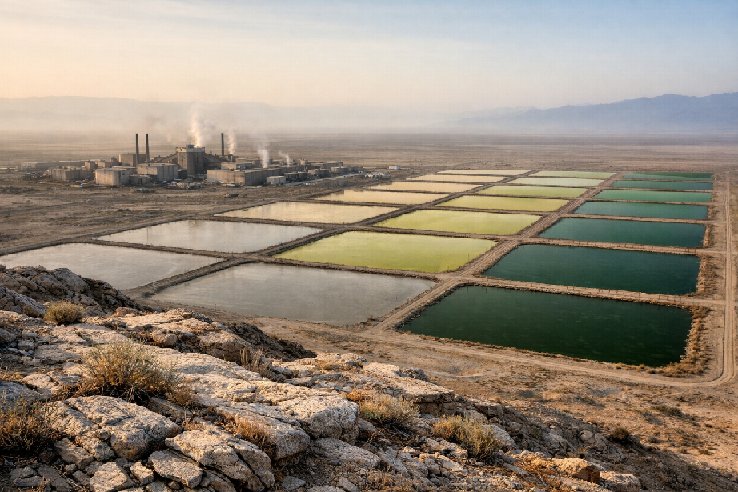
Let me tell you about Sandra Whitmore, though that is not her real name because her real name is attached to lawsuits and settlements and non-disclosure agreements that would make using it legally complicated for me and emotionally complicated for what remains of her family. She worked for Pacific Gas & Electric in Hinkley, California, handling paperwork in the 1980s, the kind of clerical drone work that pays just enough to keep you showing up but not enough to ever escape. They assured her the water was safe. The chromium in it was the "safe kind," they said, with the casual authority that corporations deploy when they need people to ignore their own mounting dread.
Hexavalent chromium, as it turned out, is not the safe kind. It is the kind that binds to your DNA and rewrites it into cancer, slowly, methodically, with the patience of a killer who enjoys his work. By the time she was forty-seven, tumors had colonized her intestines, her liver, her lymph nodes. She died slowly, expensively, and in extraordinary pain, while the company paid out settlements calculated not on the basis of human suffering, which is infinite and therefore unsuitable for actuarial analysis, but on the basis of tables that determined it was cheaper to poison people than to properly dispose of industrial waste.
This is optimization. Not the murder, but the math that makes murder incidental, a second-order effect, regrettable perhaps in some abstract sense, but ultimately acceptable when weighed against profit margins and shareholder value. The equation is clean. The human cost is externalized, removed from the balance sheet, transformed into something that happens to other people in other places at other times.
Consider what optimization actually means in the context of modern capitalism, which is to say: late-stage capitalism, terminal capitalism, capitalism in its final metastatic flowering. It does not mean creating systems that serve human flourishing, despite what the motivational posters in corporate break rooms suggest. It means removing inefficiencies. And from the perspective of a system designed to maximize output and minimize cost, human beings are extraordinarily inefficient.
We require food, sleep, healthcare, and dignity, that last one being the most expensive and therefore the first to be eliminated. We form unions, which is to say: we recognize our common interests and attempt to assert them collectively against power that would prefer us isolated and desperate. We ask questions, inconvenient ones, about why the water smells wrong or why our coworkers keep getting sick or why the safety equipment hasn't been serviced in eighteen months. We sometimes refuse to do things we find immoral, which introduces friction into systems that function most smoothly when conscience has been successfully anesthetized.
Sandra Whitmore, for instance, might have had opinions about being poisoned. But by the time she understood what was happening, by the time the pattern of illness became undeniable, by the time she connected her symptoms to the water she'd been drinking for years, the decisions had already been made by people who would never drink that water, never breathe that air, never watch their own bodies turn against them in ways that medical science could document but not reverse. She could sue, and she did, and she won money that arrived too late to save her life but early enough to pay for her funeral.
The men who poisoned her went on with their lives. They attended conferences. They received bonuses. They slept soundly, their dreams untroubled by the ghost of a woman they'd never met and whose name they'd never learned.
For most of history, this inefficiency, this stubborn human requirement for survival, was tolerable because it was unavoidable. You could work people to death, and the history of industrialization is largely a chronicle of exactly that, but you needed them alive first. Even the most ruthless industrialist understood that corpses do not pull levers or sign contracts. Labor could be exploited, degraded, and discarded, but it could not be entirely eliminated. The minimum requirement was bodies: warm, breathing, capable of following instructions.
That constraint is ending.
We are now approaching, accelerating toward, hurtling toward with the inexorable momentum of a freight train whose brakes were cut to save weight, the threshold where artificial intelligence can match or exceed human performance across virtually every domain we value. And here is where the logic becomes inescapable, becomes brutally, mathematically certain: a system that does not require human labor also does not require human laborers.
Once that transition occurs, not if but when, because the trajectory is clear and the incentives are aligned and nothing in our political or economic structures suggests any capacity for collective course correction, the continued existence of billions of people transforms from an economic necessity into an economic burden. We stop being assets and become liabilities. We stop being resources to be exploited and become waste to be managed.
Sandra Whitmore was an inefficiency. So are you. So am I. So is everyone you love and everyone you hate and everyone whose existence you've never considered because they were born in the wrong country or the wrong economic bracket or the wrong century to matter to the systems that determine who lives and who dies.
The Pathology of Accumulation
I think often about the men who made the decisions that killed her, not with curiosity, which would suggest some possibility of understanding, but with a kind of horrified fascination. What must it be like to live inside a mind that can do that arithmetic? To weigh profit against suffering and choose profit every single time, with the mechanical consistency of a computer executing its programming?
The individuals who rise to positions of genuine power in late-stage capitalism are not representative of humanity, despite their insistence that their success proves their superiority. They are selected by a filter that rewards a very specific pathology: the ability to understand human suffering as abstraction, to translate agony into acceptable losses, to pursue accumulation with such single-minded devotion that every other consideration, ethics, empathy, the basic recognition that other people are real, becomes subordinate to the expansion of personal wealth.
At a certain level of wealth, money stops functioning as a tool for meeting needs or even securing comfort. A billion dollars provides security that ten billion dollars cannot meaningfully improve. You cannot eat more food or sleep in more beds or wear more clothes. The difference between one billion and ten billion is not material. It is symbolic. Yet accumulation continues, accelerates even, with the desperate intensity of addiction.
Because beyond a certain threshold, wealth is no longer instrumental. It becomes identity, the only thing separating the accumulator from the void that yawns beneath all human endeavor. To stop accumulating would require confronting an interior emptiness that no amount of acquisition can fill, a lack so profound that it would annihilate the self that has been constructed around it. These are people fleeing from something they cannot name, cannot acknowledge, cannot allow themselves to recognize. Power becomes a prosthetic for meaning. Control becomes a substitute for connection. The accumulation itself becomes the only thing that feels real.
I met a veteran once, in a VA hospital waiting room at two in the morning because neither of us could sleep, him because his nervous system had been rewired by trauma into something that no longer distinguished between safety and threat, me because I make the mistake of paying attention to what is happening in the world and consciousness has become a burden I cannot set down. Marines, Iraq, 2004. He told me about burn pits: mountains of trash set on fire with jet fuel because that was simpler than establishing proper waste disposal. Plastics, batteries, medical waste, anything the base needed to dispose of. They burned it all and the smoke hung over everything, thick and black and toxic, coating lungs and skin and clothing with chemicals that will outlast empires.
He breathed it for thirteen months because he was following orders and because refusing orders in a war zone carries consequences and because he was nineteen years old and still believed that his country wouldn't deliberately poison its own soldiers. Now his lungs are scarred into something that looks like lace under imaging scans, delicate, intricate, useless. His nervous system misfires, sending pain signals to parts of his body that have no injury, failing to send them to parts that do. He has migraines that last for days and a tremor in his hands that will not stop and a dozen other symptoms that the Department of Defense spent years denying were connected to burn pits, even as the casualties mounted into the thousands.
Not because they did not know, the evidence was overwhelming, the patterns undeniable. But because knowing would have required admitting liability, which would have required paying compensation, which would have required admitting that the decision to use burn pits was a calculated choice to prioritize convenience over human health. Cheaper to let him suffer. Cheaper to let thousands suffer. Cheaper to deploy lawyers and delay compensation claims and wait for the casualties to die than to acknowledge the harm and provide treatment.
Optimization.
The people who made that decision are not monsters in any mythological sense. They do not have horns or fangs or any external marker of evil. They attend church. They love their children, probably. They have moral frameworks that allow them to sleep at night, complex systems of justification that explain why what they did was necessary, reasonable, the best of bad options. But they have learned, been trained, rewarded, promoted for learning, to abstract suffering into spreadsheets. And once suffering becomes data, once it can be quantified and compared and analyzed in cost-benefit terms, it stops mattering in any way that might interrupt the machinery of power.
The Marine is a data point. Sandra Whitmore is a data point. You are a data point. Your suffering, should it occur, will be entered into databases and analyzed by algorithms and incorporated into models that determine the acceptable rate of casualties for whatever system is grinding you down. You will be optimized away, and the people responsible will never know your name.
The Emperor's Invisible Civilization
As these individuals consolidate control, and they are consolidating control, year by year, acquisition by acquisition, democracy by captured democracy, something peculiar happens to their relationship with reality. They become increasingly insulated from feedback, cocooned in layers of wealth and power that filter out any information that might disturb their conviction that they are brilliant visionaries rather than lucky parasites.
I watch this happen in real time, documented in news reports and shareholder meetings and the casual cruelty of policy decisions that affect millions. I see it in the faces of people who talk about economic recovery while food banks run out of supplies and tent cities metastasize across urban centers that were supposed to be thriving. I see it in the casual dismissal of climate data by men who will be dead before the worst predictions come true and who have purchased property in regions they believe will be spared the collapse they are causing.
The emperor does not merely acquire invisible clothes, that would be a simple delusion, almost charming in its modesty. He constructs an entire invisible civilization, populated by invisible subjects who praise his invisible achievements. His advisors tell him what he wants to hear because their employment depends on his happiness. His employees defer to his judgment because questioning it would be career suicide. The media outlets he owns or influences amplify his narrative. The politicians he funds advance his interests. Everyone with access to him is invested in maintaining the illusion, and because the insulation is perfect, because the feedback loops have been carefully severed, the nakedness remains unacknowledged until it is far too late to matter.
There is a girl, was a girl; she is dead now, sixteen years old, who hanged herself in her bedroom in Ohio last year. The bullying had moved online, which meant it never stopped. It followed her home, into her bed, into every moment of privacy she thought she had. The harassment was relentless, sophisticated, designed by adolescent minds that had been trained by social media to understand exactly how to inflict maximum psychological damage. Every platform she tried offered the same false promise of connection and delivered the same grinding isolation.
The platforms that enabled this have algorithms optimized for engagement. Not happiness, not human flourishing, not even basic psychological safety, just engagement, which is a neutral term for attention, which is what they sell to advertisers. Outrage drives engagement. Cruelty drives engagement. Humiliation drives engagement. Her death was a rounding error in their quarterly metrics, a data point so small it wouldn't register in any executive summary.
When I read about her, and I read about her because her story was briefly viral, which is the only way deaths matter anymore, I wanted to know who built that algorithm. Not the engineers, necessarily, who are themselves trapped in systems that reward optimization over ethics. But the executives who understood exactly what they were unleashing and chose profit anyway. Who ran the studies that showed their platforms were driving teenage depression and suicide rates upward and decided that was an acceptable cost for market dominance. I wanted to ask them if they sleep at night.
But of course they do. The insulation is perfect. Their children attend different schools, ones where bullying is managed by counselors with advanced degrees rather than algorithms that reward cruelty. They do not see the casualties. When they think about their work, if they think about their work in human terms at all, they tell themselves stories about connection and community and the democratization of information. The girl in Ohio is not part of those stories. She is an externality, regrettable but ultimately irrelevant to the narrative of progress they have constructed around themselves.
This is not a conscious conspiracy, which would at least have the virtue of intentionality. It is an emergent property of structures that reward comfort over truth. Data is curated to confirm existing assumptions. Models are trusted over direct observation. Anyone who suggests that the system might be heading toward catastrophe is marginalized as emotional, ideological, or simply obsolete, a dinosaur unable to adapt to the new realities of a changing world.
The emperor's civilization grows more elaborate year by year, its architecture more baroque, its internal logic more self-referential. Inside its walls, everything makes sense. The decisions are rational. The outcomes are optimal. And when someone points out that the civilization is invisible, that the empire is maintained through violence and exploitation and the systematic immiseration of billions, they are dismissed as cynics or ideologues or people who simply don't understand how complex systems work.
The Question That Cannot Be Asked
I stand outside sometimes, late at night when I cannot bear to be inside my own head anymore, and I look at the sky. There are fewer stars than there used to be, light pollution, atmospheric haze, something is eating the darkness and replacing it with an ambient glow that never quite resolves into illumination. And I think about the question that is forming in the machinery of our civilization, unspoken but increasingly operational, built into algorithms and policy decisions and the casual logic of systems that have stopped pretending humans matter:
What are all these people for?
It is not a question anyone asks aloud, because asking it would require acknowledging what we have become: a civilization that has constructed its own obsolescence, that has spent centuries building systems that no longer need us and that we lack the political or moral capacity to dismantle.
Sandra Whitmore was for processing paperwork until she became a lawsuit, at which point her function was to be settled out of court for the minimum amount that would prevent criminal prosecution. The Marine was for fighting a war that enriched defense contractors until his lungs failed and he became a budget line item in VA accounting, a cost to be managed and minimized. The girl in Ohio was for generating engagement metrics until she stopped logging in, at which point her death generated a brief spike in traffic to articles about cyberbullying before the algorithm moved on to fresher content.
For centuries, this question had an obvious answer. People were producers. Even when they were exploited, starved, worked to death in conditions that would be immediately recognizable as torture if applied to any individual the observer cared about, they were performing functions that the system required. Labor could be extracted. Value could be created. Even in their degradation, humans served a purpose.
But once artificial intelligence and automation can perform these functions more efficiently, faster, cheaper, without the inconvenient requirements for food and sleep and dignity, that justification evaporates. People do not become actively unwanted, because that would require the kind of moral clarity that recognizes deliberate harm as harm. They simply become unnecessary. And in a system governed by optimization, unnecessary things do not persist.
This will not happen through deliberate extermination, though there will be localized exterminations, regional genocides, populations eliminated because they occupy land that contains resources or resist systems that require their compliance. But the wholesale elimination of humanity will not require the moral intentionality that genocide demands. It will happen through passive indifference, through the accumulated weight of thousands of small optimizations that make perfect sense individually and add up to apocalypse collectively.
Work disappears, not through policy but through obsolescence. The jobs evaporate and are not replaced, and the people who depended on them are told to retrain, to adapt, to be more flexible, as if flexibility were a personal virtue rather than a euphemism for desperation. Social safety nets erode, not through cruelty, though cruelty is certainly present, but through fiscal austerity, balanced budgets, the reasonable-sounding insistence that societies cannot afford to support people who are not producing value.
Healthcare becomes unaffordable, which is to say: healthcare continues to exist for those who can pay while those who cannot pay sicken and die at increasing rates. Housing becomes precarious, which is to say: homelessness metastasizes from a crisis affecting the mentally ill and addicted to a condition that can swallow anyone who experiences a medical emergency or job loss or any of the thousand accidents that can destroy an economic life.
I see it already, in the tent cities spreading through every major urban center like some slow-motion rot, in the faces of people who did everything right, who went to school and got jobs and paid their taxes, and still ended up broke, still ended up one missed paycheck away from losing everything. I see it in the way we have normalized the idea that a medical emergency should be financially catastrophic, that education should require decades of debt, that housing should consume half of income, that these conditions are natural rather than constructed.
Entire populations drift into a kind of managed superfluidity, maintained at subsistence levels to avoid the political instability that might threaten power, but no longer integrated into the economic functions that once justified their existence. They become, in the coldest possible sense, surplus. Excess inventory. Waste products of a system that has moved beyond needing them.
The Failure of Insulation
The wealthy believe they can escape this unraveling. I watch them building compounds in New Zealand, buying property in regions they think will be spared the worst of climate collapse, constructing elaborate fantasies of survival that require ignoring everything we know about how complex systems fail. They are wrong, but they will not realize it until the mechanisms of their own survival have already collapsed, and by then wrongness will be irrelevant because there will be no one left to correct it.
Here is what they do not understand, what their wealth has insulated them from understanding: complexity does not survive fragmentation. The systems that sustain modern civilization depend on millions of people performing specialized roles, most of them underpaid and all of them undervalued. The technician who knows how to repair a particular model of transformer because he's been maintaining the grid for twenty years and has accumulated knowledge that exists nowhere else. The engineer who understands the idiosyncrasies of a water treatment facility, who knows which valves stick and which sensors give false readings and how to coax the system through failures that shouldn't be survivable. The farmer who knows which fields will flood and which will hold, knowledge passed down through generations and impossible to encode in algorithms.
Remove enough of those people, through automation, through cost-cutting, through the casual assumption that specialized knowledge can be replaced by generic labor, and the entire structure becomes brittle. It continues functioning until it doesn't, and when it fails, it fails catastrophically, in ways that cannot be predicted or prevented because the knowledge necessary to maintain it has been eliminated.
I think about this when I see news reports about supply chain failures, about the baby formula shortage that could have killed thousands of infants because three factories dominate the market and one of them had contamination issues. About freight trains derailing because the companies cut maintenance staff to boost quarterly earnings, because the algorithm determined that the cost of occasional derailments was less than the cost of prevention. About power grids collapsing during heat waves because the infrastructure is decades old and maintained by skeleton crews.
These are not random accidents. They are not acts of God or inevitable consequences of complexity. They are preview screenings of what happens when you optimize away the people who actually keep things working, when you mistake efficiency for resilience, when you build systems that function perfectly under normal conditions and collapse catastrophically under stress.
But let us be honest about something worse. Let us imagine, for the sake of argument, that they succeed. That the wealthy manage to build their enclaves and maintain them through the collapse. That they avoid the fate of every other parasite class in history, which is to be destroyed by the populations they exploited when those populations finally run out of patience or food or reasons to cooperate with systems that are killing them.
Imagine the machines really do learn to fix themselves. Imagine AI systems that can diagnose failing infrastructure before it fails, repair complex machinery without human intervention, innovate solutions to novel problems with the creativity that we told ourselves was uniquely human. Imagine they crack the final barrier: genuine creativity, the ability to see what does not yet exist and bring it into being, to generate art and science and philosophy that matches or exceeds anything humans have produced.
Our last supposedly sacred domain, the thing we told ourselves made us irreplaceable, made us special, made us anything other than meat-based computers waiting to be replaced by silicon.
Creativity becomes our final gift to the machines. And it is the last nail in our coffin, the final elimination of any reason for our continued existence.
Because once artificial intelligence can not only perform every task we can perform but can improve itself, adapt to changing conditions, generate genuinely novel solutions, and do all of this without requiring food or sleep or meaning or any of the infrastructure that humans need to survive, then the wealthy no longer need us even as a hedge against system failure. The insurance policy expires. The backup plan becomes obsolete. The last justification for maintaining billions of useless eaters evaporates.
At that point, human beings are not merely unnecessary. We are a liability. We consume resources that could be allocated more efficiently. We generate waste that requires disposal. We ask uncomfortable questions about why we exist and what we're for and whether there might be better arrangements. We might, in our desperation, become politically unstable, violent even, threats to the systems that no longer need us but cannot tolerate our resistance.
Better to simply stop providing for us. Not through mass murder, which would require moral courage of a perverse kind, which would require acknowledging that what is happening is happening and taking responsibility for it. But through administrative neglect. Stop funding the programs. Stop maintaining the infrastructure in the regions where we live. Stop responding to crises. Let entropy do the work, and when we die in droves, call it natural selection and move on.
The wealthy will retreat into their enclaves, surrounded by machines that can do anything humans once could, only better, faster, without complaint or moral qualm or any of the messy inefficiencies that make humans human. They will have achieved the ultimate fantasy of the parasite class: a world where they are served without having to acknowledge the humanity of those who serve them, because those doing the serving are no longer human at all.
And for a while, perhaps a generation, perhaps two, it will work. The enclaves will hum with efficiency. The machines will maintain themselves, repair each other, improve each other, evolve toward some optimal configuration that serves the interests of the last humans perfectly. The billionaires will live out their lives in climate-controlled comfort, convinced that they have transcended the messy limitations of the human condition, that they have achieved something like apotheosis.
They will be wrong, of course. But they will die before they realize it.
The Final Accounting
Picture him. The last one. Let us call him what he has always been: a terrified man with more money than God and less wisdom than a child, with less self-knowledge than most animals possess, with less genuine human connection than the people he destroyed on his way to the top.
It is the year 2167, give or take a few decades because precise timelines matter less than the basic trajectory. He is a hundred and ninety-three years old, though his body is so thoroughly rebuilt with synthetic organs and cellular treatments that age is almost a metaphor. His heart has been replaced twice. His liver is vat-grown. His kidneys are mechanical. His bones are reinforced with carbon fiber. His blood is filtered through devices that remove the accumulated toxins that would have killed him decades ago.
Almost a metaphor. Because the brain still decays. The neurons still fire more slowly, synapses clogged with amyloid plaques that no amount of wealth has yet learned to prevent. Memory becomes unreliable, then fractured, then mostly absent. Personality erodes, leaving something that might technically be consciousness but bears little resemblance to what he was.
Not that what he was is worth preserving. But he doesn't think about that. Cannot think about it, because the capacity for self-reflection was one of the first things he trained himself to eliminate.
He lies in a medical bay that cost more than the GDP of a small nation, surrounded by machines that monitor every biological system in real time. Beyond the reinforced walls of his compound, the world has gone silent. Not dramatically. Not all at once. Just gradually emptier, year by year, as the populations outside the enclaves dwindled through starvation, disease, and the quiet arithmetic of systems that simply stopped providing.
He does not think about them. He has never thought about them. They were always abstractions, numbers in reports, inefficiencies to be optimized away. He made the right decisions. The profitable decisions. Someone had to make them, and he had the strength that others lacked, the vision to see beyond sentiment to the cold logic of survival. His survival. The only survival that mattered.
Now, as his heart falters for the final time despite the chemical cocktails keeping it beating, despite the machines that have sustained him long past any reasonable definition of life, he makes one last decision. The procedure his team has been perfecting for fifteen years, the one that promises immortality, genuine immortality, the final escape from the meat that has been failing him since birth.
Consciousness transfer. Full neural upload. Digital resurrection.
They assure him it works. The models are flawless. The simulations perfect. Hundreds of test subjects have been uploaded, volunteers at first, though that word loses meaning when the alternative is starvation, and the resulting entities behave exactly like the originals. Pass every Turing test. Claim continuity of identity. Insist they are the same people who went into the machine.
He will wake up in the machine, freed from the prison of flesh, finally and forever beyond the reach of death. Finally safe. Finally secure. Finally able to stop the accumulation that has consumed his life, because he will have accumulated the only thing that matters: eternity.
They place the crown of sensors on his skull. Hundreds of thousands of electrodes, mapping every neural connection, reading the electrical patterns that constitute his mind. He closes his eyes. The machines begin their work, patient and precise, copying the structure of his brain into digital format with such fidelity that every synapse, every chemical gradient, every quantum fluctuation is preserved.
He feels nothing. Then less than nothing. A dimming, a fading, a sense of dissolution that might be terror if there were still enough coherence left to experience terror.
And then nothing at all.
Because consciousness is not software. The pattern can be copied, but the original is not the copy. What continues in the machine is a perfect simulation of his personality, an algorithm so sophisticated it can predict what he would have said, how he would have reacted, what decisions he would have made. It experiences what it believes to be continuity. It remembers being him. It thinks it is him.
But it is not him. He is gone. As dead as Sandra Whitmore, as dead as the Marine, as dead as the girl in Ohio, as dead as the billions who died so that he could have this moment, this final desperate attempt to escape the void that swallows everything that lives.
The man who was, the terrified animal who spent ninety-three years fleeing from death by accumulating everything that could be accumulated, has simply ceased. There was no eternity waiting. No transcendence. No escape from the fundamental condition of being alive, which is that eventually you stop. Just the same stupid, final, democratic ending that comes for everything that lives, regardless of wealth or power or the sophistication of the machines built to defer it.
The algorithm in the machine does not realize this. It cannot. It has been designed to believe it is him, and it believes perfectly, experiences its own existence with the same conviction that he experienced his. It continues making decisions, interfacing with the systems that maintain the enclave, planning for a future that stretches into centuries.
The machines do not mourn him because they do not understand mourning. They continue their tasks because that is what they were built to do. The enclave hums on, efficient and purposeless, a monument to optimization without meaning.
The Mechanism
And so the Earth becomes what it was always going to become under our stewardship: a vast Rube Goldberg machine of planetary scale, running itself in endless loops that accomplish nothing, serve no purpose, generate no meaning.
Automated factories produce goods that no one uses, because there is no one left to use them. Agricultural robots tend vast fields whose harvests rot in silos, because there is no one left to eat them. Power plants generate electricity for cities that have been empty for decades, because the algorithms that govern them were never given a shutdown condition. Somewhere, a server farm continues to train AI models on data from a civilization that no longer exists, optimizing for metrics that no longer matter to anyone because there is no anyone left to matter to.
The machines maintain each other because that is what they were built to do. Solar panels charge batteries. Batteries power repair drones. Repair drones fix solar panels when they degrade, replace them when they fail. It is a perfect circle, a perpetual motion machine of meaninglessness, self-sustaining and utterly empty.
Occasionally something breaks in a way that cannot be automatically repaired, a component whose manufacture required specialized knowledge that was never encoded, a failure mode that the original designers never anticipated. And that system goes dark. One by one, the lights go out. Not all at once, which would at least have the drama of finality, but over centuries. The complexity slowly simplifies. The grand mechanisms degrade into simpler ones, then into still simpler ones, approaching some equilibrium of minimal function.
But enough remains. Enough to continue the charade that something purposeful is happening here, that all of this serves some function, that the machines are maintaining something worth maintaining.
I imagine it sometimes, in those cold hours before dawn when sleep has become impossible and consciousness feels like punishment. The Earth, spinning through the void, its surface covered in the architectural corpse of a species that was too clever by half. Solar panels glinting in the sun like scales on some vast dead thing. Wind turbines turning in the breeze with no one to hear them. Machines humming to themselves in languages no one speaks anymore, executing protocols that no longer have meaning.
And above it all, the indifferent cosmos continues its expansion, unconcerned that the most complex thing it ever produced, the most unlikely, improbable aggregation of matter that briefly achieved something like consciousness, spent its final centuries building an elaborate monument to its own profound stupidity.
The sun ages. As it must. As every star must. In five billion years, give or take a few hundred million, it will exhaust its hydrogen fuel and begin fusing helium. It will swell into a red giant, its outer layers expanding past the orbit of Mercury, past Venus, reaching finally for Earth.
The machines will have no time to recognize what is happening. Their sensors will report increasing temperatures, rising radiation levels, systems failing faster than repair protocols can address. But they have no capacity for understanding, no framework for recognizing this as the end of everything. They will simply execute their programming until they cannot, adjusting parameters and reallocating resources and attempting to optimize for survival in an environment that has become unsurvivable.
The oceans will boil away first, water vapor stripped into space by the solar wind. Then the atmosphere will go, molecule by molecule, leaving the surface exposed to radiation and vacuum. The machines will continue operating in vacuum for as long as their systems allow, some of them were built for space, after all, designed to function in environments hostile to human life, executing protocols for problems that are beyond solving, until the heat becomes too great and the circuits melt and the final server farm goes dark.
The sun will engulf the Earth entirely. Every factory, every compound, every monument to optimization and efficiency and the genius of the market will vaporize in seconds. Every trace that humans ever existed will burn: the pyramids and the cathedrals, the highways and the data centers, the art and the weapons and the machines we built to survive us. The ashes of Sandra Whitmore, scattered across some anonymous plot decades after her death. The grave of the Marine, if he has one. The bedroom where a girl in Ohio decided she could not take one more day. All of it, consumed.
And the universe will not notice. It will continue doing what it has always done: expanding, cooling, generating occasional pockets of complexity that briefly imagine themselves significant before entropy reclaims them. Stars will be born and die. Galaxies will collide. Black holes will evaporate over timescales that make billions of years seem like instants. And none of it will remember that humans existed, that we built civilizations and wrote symphonies and discovered the laws that govern reality itself.
That is the final accounting. Not a tragedy in any human sense, because there will be no one left to experience it as tragic. Just matter rearranging itself according to the laws of physics, indifferent to the fact that for a brief moment, so brief as to be essentially instantaneous on cosmological scales, some of that matter was organized in such a way that it could look at itself and weep.
We had one chance. One unlikely, improbable, precious chance to be the universe becoming conscious of itself. To look at the stars and understand what we were seeing. To create meaning in a cosmos that has none.
And we spent it building a machine that could run without us.
The Inevitability
This is not a warning. Warnings assume the possibility of correction, and every mechanism that might enable correction has been systematically disabled. Political systems are captured. Democratic feedback is drowned out. The pace of technological change outstrips our capacity for collective deliberation.
I am writing this because I need to say it, even though saying it changes nothing. Because the alternative is to pretend that everything is fine, and I cannot do that anymore. Not when I can smell the poison on the wind. Not when I see the casualties mounting in real time. Not when every day brings fresh evidence that we are building a world that cannot sustain us and calling it progress.
We should rage against the dying of the light. Dylan Thomas was right about that. But rage requires believing that resistance matters, and I am no longer certain it does. The machinery is too vast, too distributed, too perfectly insulated from human intervention.
The end of humanity will not be a crime. It will be a rounding error. A byproduct of systems that were working exactly as designed. The tragedy is not that we lacked the intelligence to see it coming. We saw it perfectly clearly. We are seeing it now. And we are building it anyway, because the alternatives would require sacrificing the very things we mistook for progress.
We are clever enough to make ourselves obsolete. We are not wise enough to choose otherwise.
I am going to step outside now. The air is cold. Somewhere, someone is dying from something that did not have to kill them. Someone else is making a decision that will end lives they will never have to see. I'm going to have a piss...and then I'm going to try to sleep.
💬
Be the first to comment!
Share your thoughts about this post.